

Drinking water fountain maintenance means wiping and disinfecting the unit daily or weekly, flushing little-used outlets every week, changing the filter every 11,356 litres or 12 months at the latest, and booking a professional sanitisation and safety inspection every 6 to 12 months. Keep a log so you can show Legionella control under HSE guidance.
Key takeaways
- Wipe the basin, nozzle and push button or sensor every day on busy sites, and at least weekly everywhere else.
- Flush any fountain that hasn’t been used for 7 days, and run little-used outlets weekly, as set out in HSE guidance HSG274 Part 2.
- Cold water at the outlet should be below 20°C within two minutes of running. Check sentinel outlets monthly and keep the records for at least five years.
- Elkay WaterSentry Plus filters are rated for 11,356 litres (3,000 US gallons) or one year, whichever comes first. Busy sites usually need a change every six months.
- A genuine Elkay replacement filter costs £94.95 + VAT as of October 2026, or about £87.33 each in a pack of 12.
- Employers must provide wholesome drinking water under Regulation 22 of the Workplace (Health, Safety and Welfare) Regulations 1992, and schools must keep drinking water accessible under the School Premises (England) Regulations 2012.
In this guide
- The maintenance schedule at a glance
- Do water fountains need maintenance?
- How to clean a drinking water fountain, step by step
- Do water fountains have filters that need to be changed?
- Flushing, Legionella and your duties under HSE guidance
- Extra checks for chilled, sensor and outdoor units
- What maintenance costs in the UK
- The rules that apply in UK workplaces, schools and public buildings
- What to do yourself and what to leave to an engineer
- Drinking fountain maintenance FAQs
- Get help with your fountains
Drinking Water Fountain Maintenance at a Glance
Drinking water fountain maintenance is the routine cleaning, flushing, filter replacement and inspection that keeps a mains-fed fountain or bottle filling station safe to drink from. Most of it takes minutes. The table below shows what to do and how often, based on Elkay’s filter guidance and the HSE’s technical guidance on Legionella.
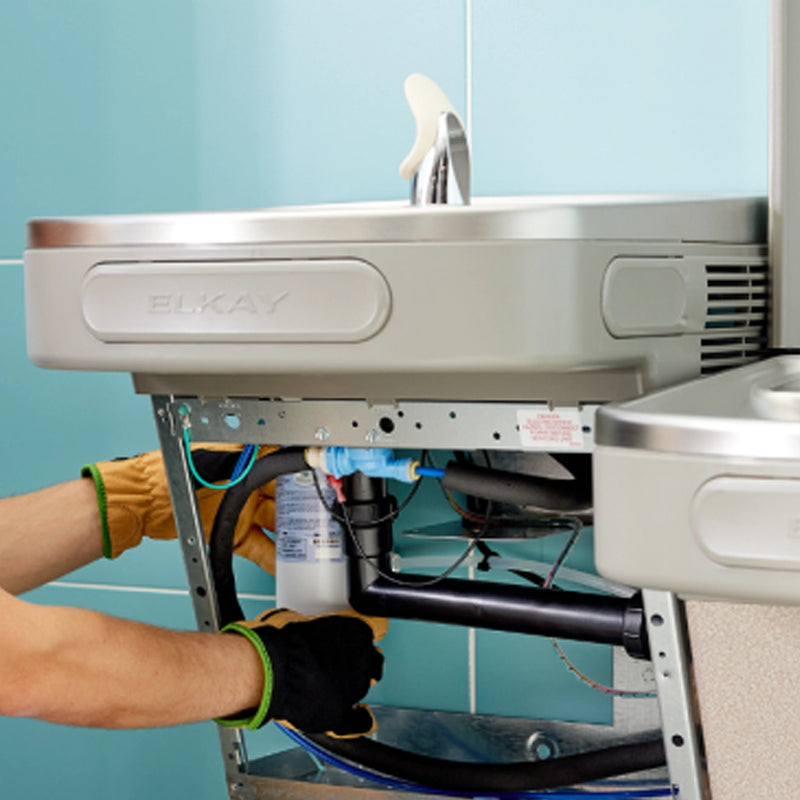
| Task | How often | Who does it |
|---|---|---|
| Wipe basin, nozzle, bubbler and button or sensor with mild detergent, then rinse | Daily on busy sites, weekly elsewhere | Caretaker or cleaner |
| Clear the drain grate of debris | Weekly | Caretaker or cleaner |
| Run each little-used outlet for several minutes | Weekly, or as set by your risk assessment | Caretaker or cleaner |
| Check cold water is below 20°C within two minutes at sentinel outlets | Monthly | Responsible person |
| Check the filter status light and the litres dispensed | Monthly | Responsible person |
| Replace the filter | Every 11,356 litres or 12 months, whichever comes first. Every 6 months on busy sites | Caretaker or engineer |
| Full sanitisation, descale and safety inspection | Every 6 to 12 months | Trained engineer |
| Review the Legionella risk assessment | Regularly, and whenever the system or its use changes | Responsible person |
Sources: HSE HSG274 Part 2, Table 2.1; Elkay WaterSentry Plus 51300C spec sheet; Water Refill Group service plans.
Water Refill Group, Elkay’s exclusive UK and EU distributor, supplies, installs and services bottle filling stations and drinking fountains across the UK. The schedule above is the one our engineers work to on school, office and public sector sites.
Do water fountains need maintenance?
Yes. A drinking fountain is a water outlet that people put their mouths and bottles close to, so it needs the same care as the rest of the building’s water system, plus a bit more. Four reasons:
Hygiene. The nozzle, bubbler and button get touched hundreds of times a day. Elkay’s silver ion antimicrobial protection on key plastic parts helps, but it doesn’t replace cleaning. Source: Elkay ezH2O fact sheet.
Legionella. HSE guidance puts outlets unused for seven days or more on a weekly flushing regime. A fountain in a quiet corridor is exactly that kind of outlet. Source: HSE HSG274 Part 2.
Limescale. Much of England runs on hard water. Scale narrows the bubbler orifice, slows the fill and leaves white marks on stainless steel.
Warranty. Elkay’s care guidance says damage from aggressive or abrasive cleaners isn’t covered. Source: Elkay care and cleaning instructions.
On most sites we service, the two things that lead to call-outs are drains blocked with food waste and a filter that’s gone well past its change date. Both are avoidable with a five-minute weekly check.
How to Clean a Drinking Water Fountain, Step by Step
Clean a drinking water fountain with a mild detergent, a soft cloth and a food-safe disinfectant, then rinse and run the water through. It takes about ten minutes.
- Put on gloves and gather your kit. Mild liquid detergent, a food-safe disinfectant, a soft cloth or sponge, a small soft brush and a descaler suitable for stainless steel. Skip chlorine bleach, steel wool and scouring pads. Elkay says they scratch the finish and void the warranty.
- Wipe the outside. Wash the basin, the bottle filler alcove, the bubbler and the button or sensor panel with detergent and warm water. Wipe in the direction of the grain on brushed stainless steel.
- Disinfect the touch points. Apply the disinfectant to the bubbler, nozzle, button and bottle rest. Leave it for the contact time printed on the label, then wipe it off. Don’t let cleaner dry on the surface.
- Brush the bubbler and drain. Use the small brush around the bubbler orifice and across the drain grate, where biofilm and crumbs collect.
- Descale if needed. If you see white deposits, apply a stainless-safe descaler for the time on the label, then rinse well.
- Rinse and flush. Wipe all surfaces with clean water, then run the bubbler and the bottle filler for several minutes. This clears cleaning residue and refreshes the water in the pipework.
- Dry and log it. Towel dry to stop mineral spots, then note the date on your maintenance log.
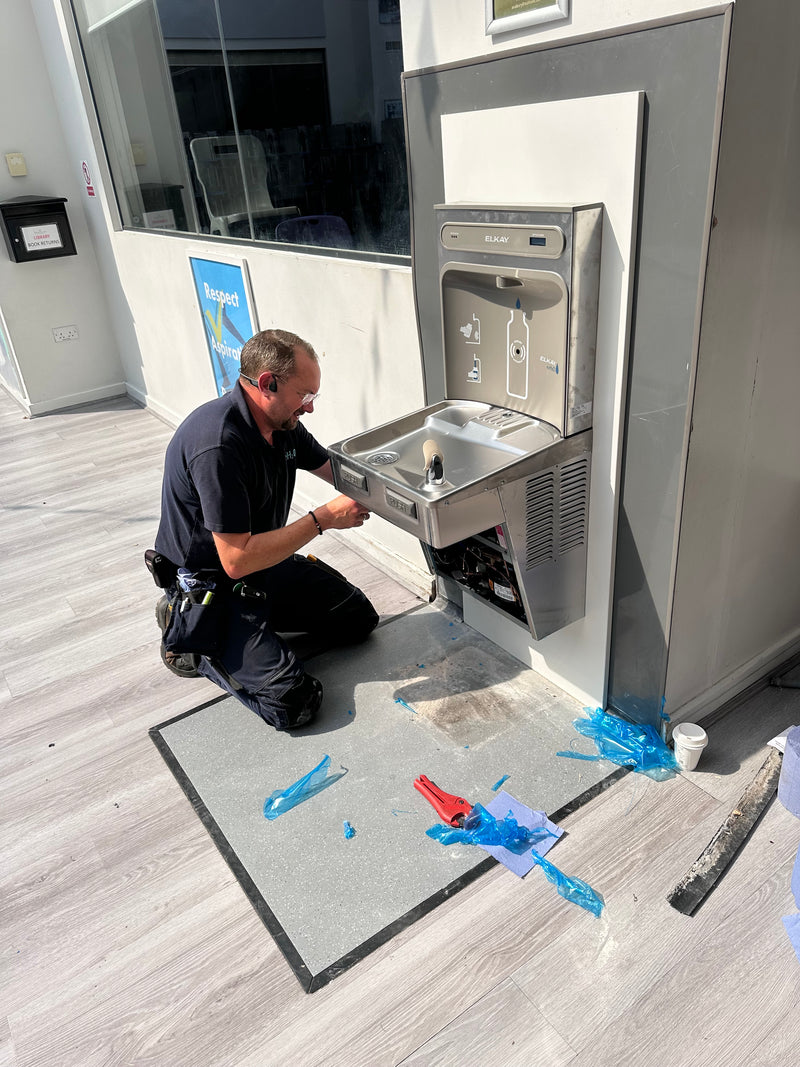
Source for cleaning products: Elkay care and cleaning instructions. Source for flushing: HSE HSG274 Part 2, paragraph 2.78.
If a unit is sticking, leaking or filling slowly after cleaning, our Elkay drinking fountain troubleshooting guide covers the common faults.
Do water fountains have filters that need to be changed?
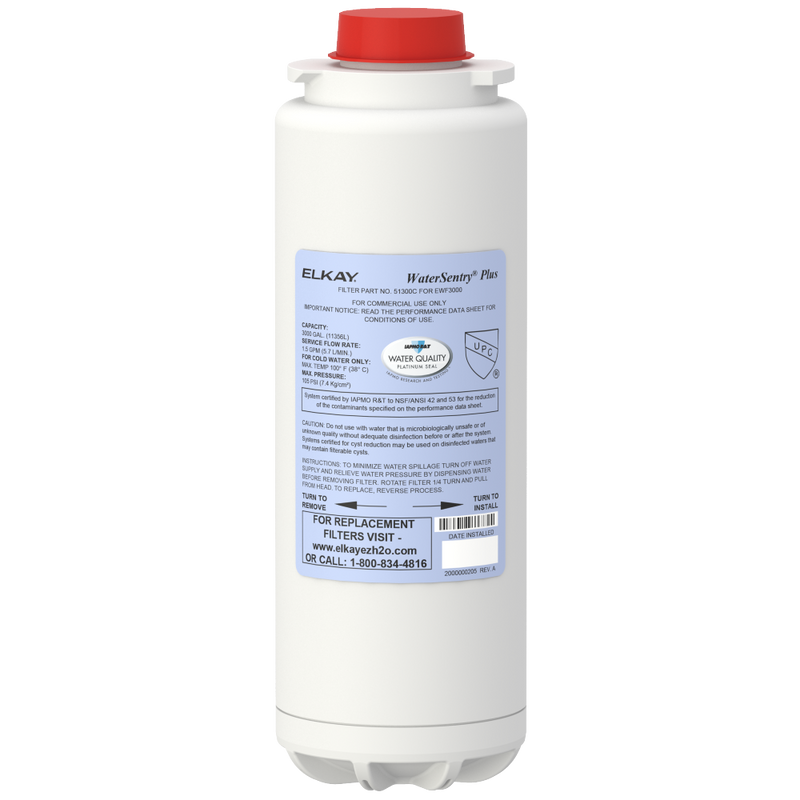
Filtered models do, and the filter is the single most important part to keep on schedule. Non-filtered units, such as most outdoor models, don’t have one. On an Elkay ezH2O station the filter is the WaterSentry Plus 51300C.
| Elkay WaterSentry Plus 51300C | Figure |
|---|---|
| Rated capacity | 3,000 US gallons (11,356 litres) |
| Replacement interval | Every 3,000 gallons or 1 year after installation, whichever comes first |
| Certified to | NSF/ANSI 42 and 53 (chlorine, taste and odour, lead, Class I particulate); NSF/ANSI 372 lead free |
| Flow rate | 1.5 US gallons per minute (5.6 litres per minute) |
| UK price as of October 2026 | £94.95 + VAT, or about £87.33 each in a pack of 12 |
Sources: Elkay 51300C spec sheet; Water Refill Group parts and accessories.
Elkay’s one-year figure is the maximum. A school or gym unit filling hundreds of bottles a day can get through 11,356 litres in a few months, which is why we recommend a six-month change on busy sites. The status light goes green, yellow, then red as the filter wears, and on enhanced models a genuine Elkay filter resets it automatically. Source: Elkay ezH2O fact sheet.
For the full change procedure, read how often an Elkay water fountain filter should be changed.
Flushing, Legionella and Your Duties Under HSE Guidance
If you manage a building, you’re the dutyholder for Legionella control, and drinking fountains are part of the cold water system it covers. The HSE’s Approved Code of Practice L8 and HSG274 Part 2 set out what’s expected. For fountains and bottle fillers that means:
- Flush little-used outlets weekly. HSG274 Table 2.1 says infrequently used outlets should be flushed “weekly, or as indicated by the risk assessment”, and any equipment unused for seven days or more belongs on the flushing list. Paragraph 2.78 adds that a few minutes of weekly flushing significantly reduces risk if it’s kept up and logged.
- Keep cold water cold. Outlets should be below 20°C within two minutes of running the tap. Check temperatures at sentinel outlets monthly.
- Keep records. Monitoring and inspection records should be kept for at least five years.
- Review the risk assessment regularly and whenever something changes, such as a new unit, a refit or a change in how the building is used.
Source: HSE HSG274 Part 2 and HSE guidance on hot and cold water systems.
Should you turn off a water fountain every night or let it run?
Leave it connected and in use. Isolating a fountain overnight does nothing useful, and isolating it for a week or more creates the stagnant water Legionella guidance warns about. Chilled units are built to run continuously, and switching the chiller off each night only wastes energy on the re-cool. The exception is a planned shutdown, such as a school summer holiday. Then the unit goes on the weekly flush, or it’s isolated, drained and cleaned before it’s used again.
Extra Checks for Chilled, Sensor and Outdoor Units
Chilled units. The refrigeration system needs airflow, so keep the vents clear and have the condenser cleaned at the annual service. If the water isn’t cold or the unit is noisy, book an engineer rather than opening the casing. Compressors are excluded from most service plans, so catching a fault early matters.
Sensor units. Elkay’s hands-free bottle fillers use a sensor with an automatic 20-second shut-off. A dirty or scratched sensor lens is the usual cause of a filler that won’t start or won’t stop. Wipe it with a soft cloth only. Source: Elkay ezH2O fact sheet.
Outdoor units. Most outdoor bottle filling stations are non-filtered, so the filter steps don’t apply. Frost is the risk instead. Before a cold snap, isolate and drain the unit as the manufacturer’s instructions describe, because trapped water can crack the valve cartridge. Check the fixings and the drain for leaves each month.
Need a hand with any of this? Tell us how many units you have and where, and we'll set up the visits for you.
Get a service plan quoteWhat Does Drinking Water Fountain Maintenance Cost in the UK?
As of October 2026, the ongoing cost of a filtered Elkay fountain comes to under 1p per 500 ml fill once water and filters are added up. Professional servicing sits on top of that and depends on the plan.
| Cost item | Figure (as of October 2026) | Source |
|---|---|---|
| Mains water | About 0.42p per litre on Thames Water’s 2026 to 2027 metered rates (£2.7346 clean plus £1.4721 wastewater per cubic metre) | WRG cost guide |
| Genuine Elkay 51300C filter | £94.95 + VAT each, about £87.33 each in a 12-pack | WRG parts |
| Worked example: 200 staff, one 500 ml bottle each per working day | 23,000 litres of water (£97) plus 3 filters (£284.85) = about £382 a year | WRG cost guide |
| Water Refill Group service plans | Quoted per site. Three tiers, described below | WRG service and maintenance |
Water Refill Group’s plans are priced per site because travel, the number of units and the model mix all change the figure. The Silver Plan includes one filter change a year with parts billed separately, the Gold Plan includes two changes a year with parts and labour (except major components such as compressors), and the Smart Service Plan changes filters when live usage data says they’re needed. All three include sanitisation, a safety inspection and genuine Elkay parts. Source: Water Refill Group service plans.
The Rules That Apply in UK Workplaces, Schools and Public Buildings
UK law doesn’t tell you how to clean a fountain, but it does make you responsible for providing safe drinking water and controlling Legionella. Four rules come up most.
| Rule | What it requires | Who it applies to |
|---|---|---|
| Workplace (Health, Safety and Welfare) Regulations 1992, Regulation 22 | “An adequate supply of wholesome drinking water” in readily accessible places, signed where needed, with cups unless the water comes as a jet people can drink from | All employers |
| School Premises (England) Regulations 2012, Regulation 9 | Suitable drinking water facilities, readily accessible whenever the premises are in use, in a separate area from the toilets, and clearly marked | Maintained schools in England |
| Health and Safety at Work etc. Act 1974 with ACOP L8 and HSG274 | Legionella risk assessment, control measures, monitoring and records for hot and cold water systems | Anyone in control of premises |
| Water Supply (Water Fittings) Regulations 1999 | Fittings connected to the mains must be of an appropriate quality and standard. WRAS approval is the usual way to show it, and an approval lasts a maximum of five years | Anyone installing or owning mains-connected fittings |
Sources: legislation.gov.uk, Regulation 22; School Premises (England) Regulations 2012; HSE HSG274 Part 2; WRAS Approvals FAQ.
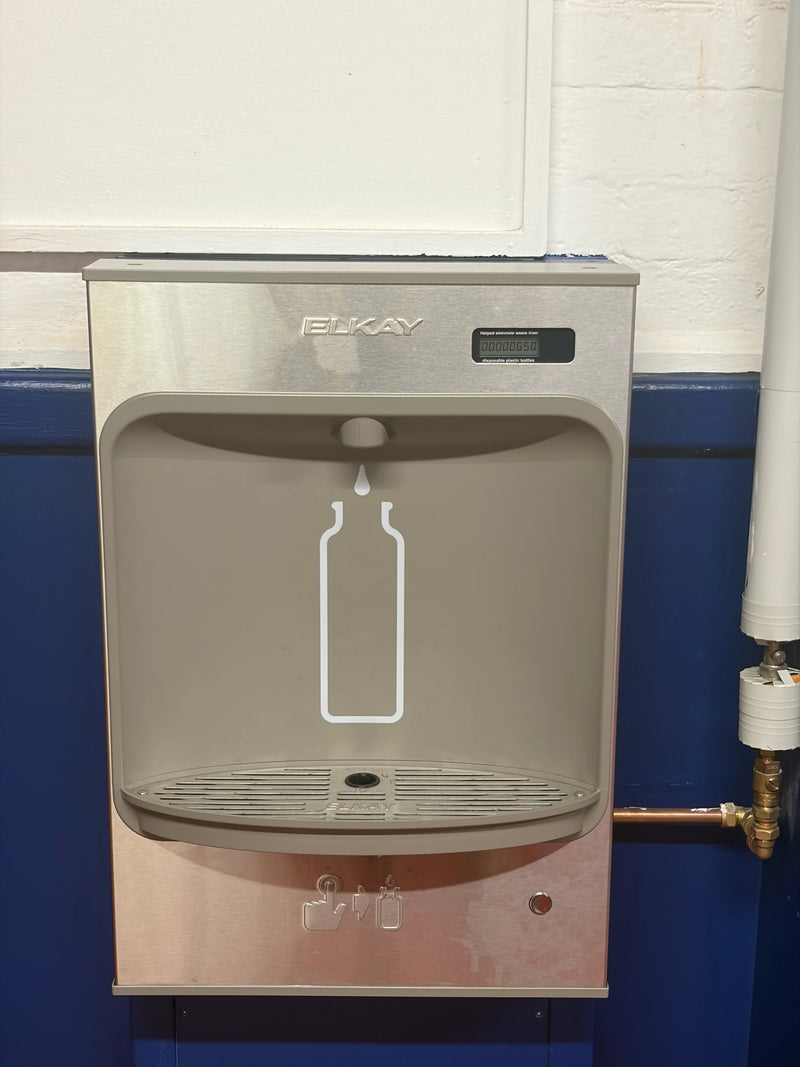
Every fountain and bottle filling station Water Refill Group supplies is WRAS approved, so the fittings side is covered from day one. See our guide to WRAS approved water solutions, or the Specify Elkay page if you’re writing a spec for a refit.
What to Do Yourself and What to Leave to an Engineer
Most drinking water fountain maintenance can be done in-house by whoever cleans the building. A smaller set of jobs needs a trained engineer, because it touches the water supply or refrigeration, or because it has to be recorded for your Legionella control.
Do it yourself
- Daily and weekly wipe-downs and disinfecting
- Weekly flushing of little-used outlets, with a note in the log
- Monthly temperature checks and filter light checks
- Filter changes, if someone on site is confident with the procedure
- Clearing the drain and wiping the sensor lens
Book an engineer
- Six-monthly or annual sanitisation of the internal pipework and tank
- Descaling inside the unit
- Condenser cleaning and refrigeration checks on chilled models
- Bubbler valve adjustment, leaks and cartridge replacement
- Anything involving the mains connection, backflow protection or electrics
- The safety and system inspection that goes on your compliance file
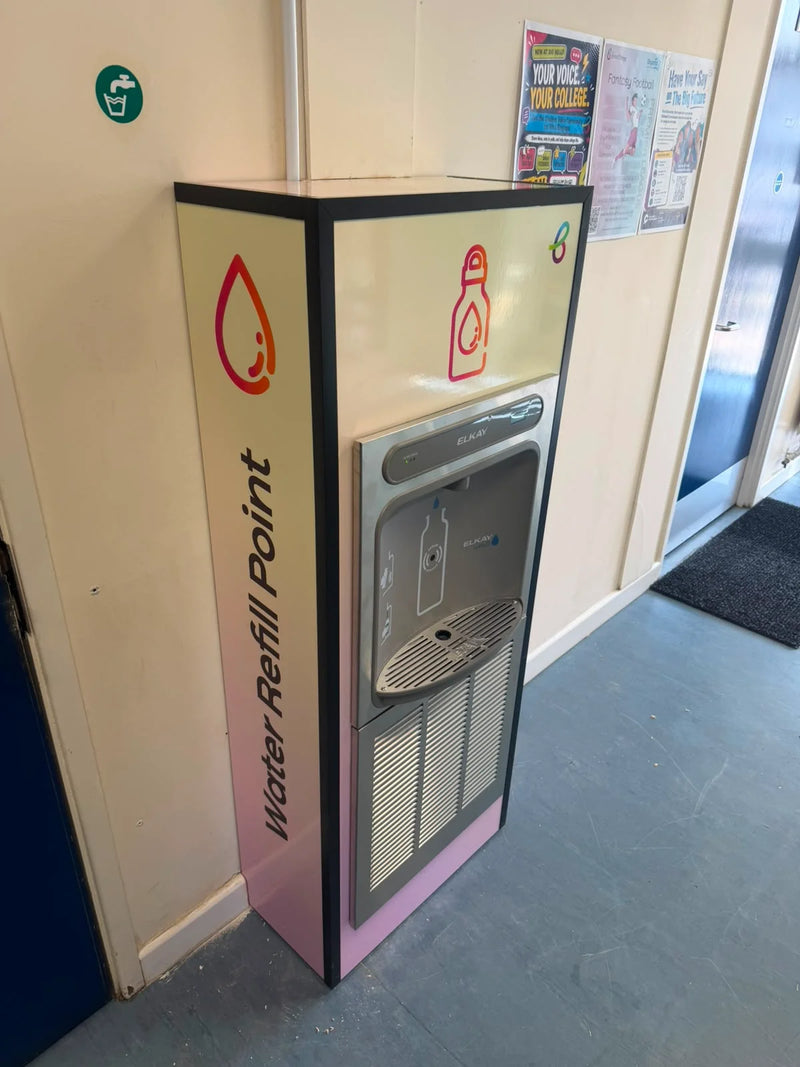
When we replaced the ageing units at City of Bristol College with 20 branded Refill Hub stations across five campuses, the old equipment had needed frequent repairs and had periods of downtime. The new units went onto a planned schedule from day one. Source: City of Bristol College case study.
Water Refill Group’s engineers are vetted, trained and approved to service Elkay and other leading hydration systems, with nationwide UK coverage. Source: Water Refill Group service and maintenance.
Drinking Fountain Maintenance FAQs
How often should a water dispenser be serviced?
Every 6 to 12 months, depending on use. A fountain in a busy school, gym or hospital corridor should have a professional sanitisation and inspection twice a year. A unit in a quiet office can usually go annual. In both cases the filter still needs changing at 11,356 litres or 12 months, whichever comes first.
Do water fountains need maintenance?
Yes. Every mains-fed fountain needs regular cleaning of the basin, bubbler and touch points, weekly flushing if it’s rarely used, filter changes on filtered models, and a periodic sanitisation and safety check. The HSE treats fountains as part of the building’s cold water system, so they fall under your Legionella risk assessment too.
Do water fountains have filters that need to be changed?
Filtered models do. Elkay ezH2O stations use the WaterSentry Plus 51300C, rated for 11,356 litres or one year. The status light turns yellow, then red, as the filter wears out. Non-filtered units, including most outdoor models, have no filter and rely on the mains supply and routine cleaning instead.
Should you turn off a water fountain every night or let it run?
Let it run. Fountains and chilled bottle fillers are built for continuous use, and daily isolation only creates stagnant water and wastes the energy used to re-cool the tank. For long closures, such as holidays, either keep the unit on a weekly flush or isolate, drain and recommission it with a clean before reopening.
What should I use to clean a drinking water fountain?
Use a mild liquid detergent, warm water and a soft cloth, then a food-safe disinfectant on the bubbler, nozzle and button. Elkay’s care guidance rules out chlorine bleach, steel wool and abrasive pads on stainless steel because they scratch the finish and void the warranty. Rinse well and never let cleaner dry on the surface.
How much does it cost to maintain a drinking water fountain?
As of October 2026, filters and water on a filtered Elkay unit come to under 1p per 500 ml fill, with a genuine filter at £94.95 + VAT. Professional service plans are quoted per site, because the number of units, the models and travel all change the figure. Ask for a quote with your unit list and postcode.
Can I do bottle filling station maintenance myself?
You can handle the cleaning, flushing, temperature checks and, with a bit of practice, the filter change. Leave the six-monthly sanitisation, internal descaling, refrigeration work and anything on the mains connection to a trained engineer. That split keeps your costs down and gives you a written inspection record for your compliance file.
What records should I keep for a drinking water fountain?
Keep a simple log of cleaning dates, weekly flushes, monthly temperature readings, filter changes and service visits. HSE guidance says monitoring and inspection records should be kept for at least five years. A one-page sheet by the unit, or a line in your building’s Legionella log book, is enough.
Get Help With Your Fountains
If you’d rather hand drinking water fountain maintenance to the people who supply the units, Water Refill Group, Elkay’s exclusive UK and EU distributor, offers one-off services and Silver, Gold and Smart plans across the UK. Call 0333 335 6908, email support@waterrefillgroup.com or request a quote through our contact page. You can also browse genuine Elkay filters and parts if you’re keeping the work in-house.
